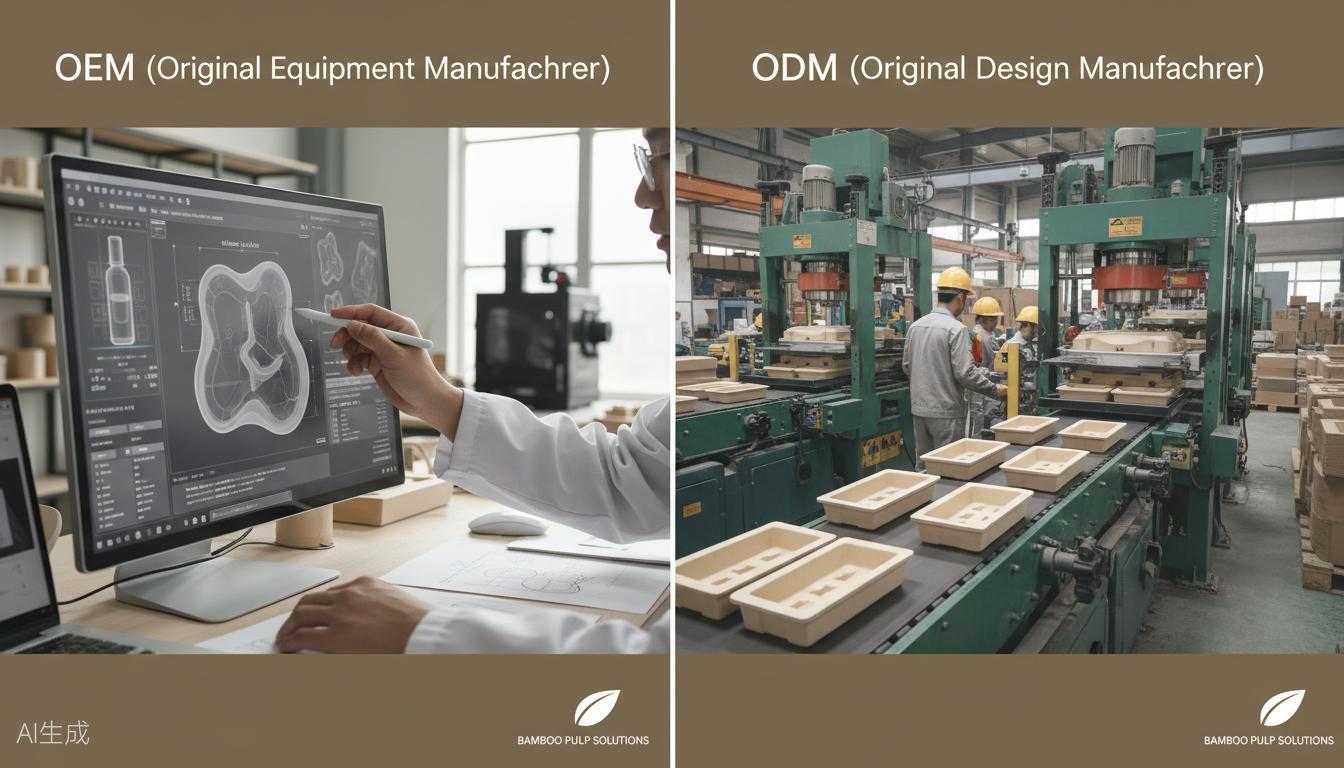
When sourcing bamboo molded pulp packaging for the first time, buyers often need to choose between a faster ODM route and a more controlled OEM route. The right choice usually depends on launch speed, budget, order volume, and how much product exclusivity matters.
How do OEM and ODM differ most?
| Factor | ODM | OEM |
|---|---|---|
| Tooling ownership | Usually based on existing supplier tools | Usually based on customer-specific tools |
| Design freedom | Limited to modifications of existing formats | Much higher freedom for structure and brand-specific fit |
| MOQ and launch speed | Often easier for smaller test runs | Usually needs larger volume and more development time |
| IP control | Weaker exclusivity in many cases | Stronger protection if tooling ownership and contracts are clear |
When does ODM make more sense?
ODM is often useful for market testing, early-stage brands, or projects that need to launch quickly with lower tooling risk. The buyer gives up some differentiation but gains speed and lower upfront cost.
When does OEM make more sense?
OEM is usually better when the packaging itself needs to support brand identity, product fit, or logistics optimization in a way that existing supplier formats cannot. The trade-off is higher development cost and slower launch.
If you are choosing between OEM and ODM for bamboo molded pulp packaging, compare volume plan, tooling budget, and brand differentiation needs together. The wrong cooperation model creates more cost than the wrong tray design.
Request Quote