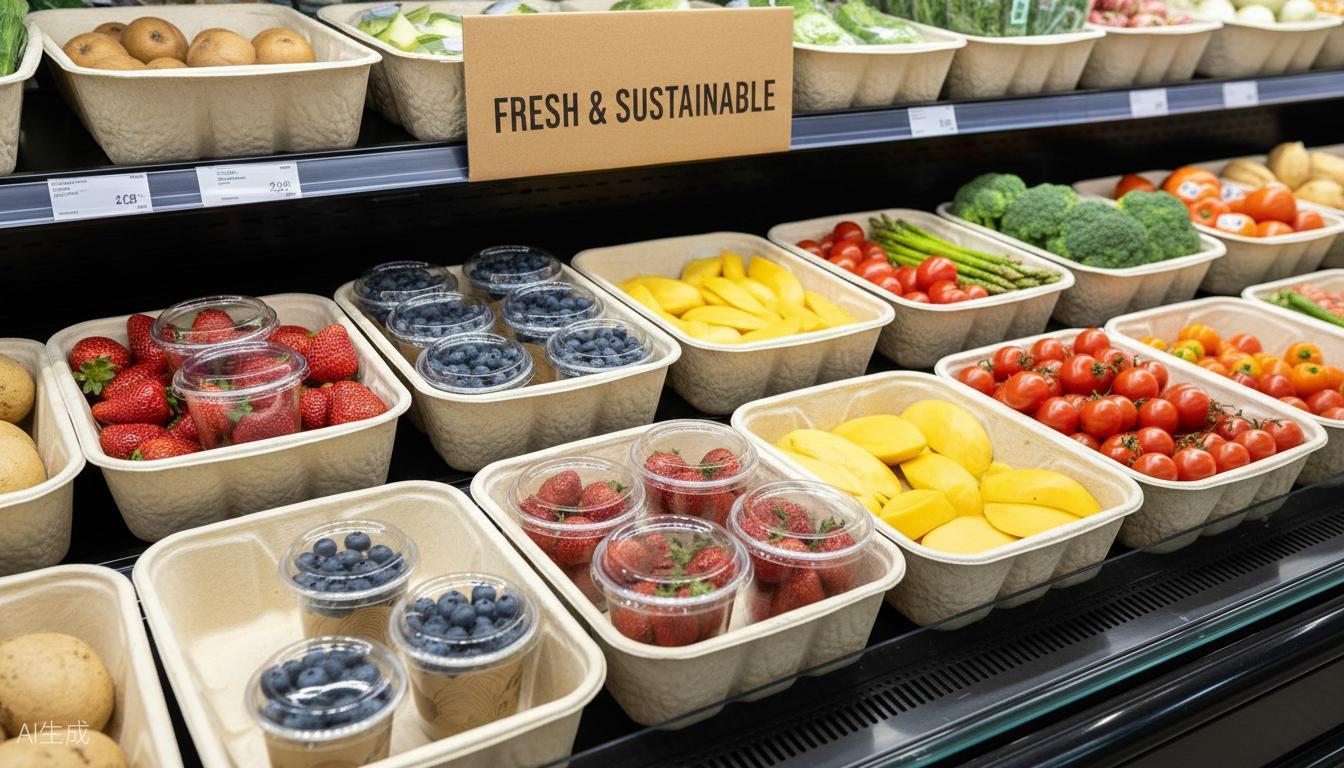
Produce packaging is a good example of where bamboo molded pulp is not just a plastic replacement story. Its natural breathability, moisture interaction, and structure can actually affect condensation control and shelf-life performance for fruit and vegetables.
Where can bamboo molded pulp help most?
| Produce Type | Why Molded Pulp Can Help | What Must Be Controlled |
|---|---|---|
| Berries and high-respiration produce | Better ventilation can reduce trapped moisture and odor risk | Vent-hole layout still matters |
| Leafy vegetables | Breathability can reduce surface moisture buildup | Moisture loss cannot become too aggressive |
| Mushrooms and sensitive fresh produce | Controlled air exchange can improve pack condition | Package geometry and stack pressure remain important |
Why is vent design still important if pulp already breathes?
Because natural porosity alone may not be enough for higher-respiration products. For berries and leafy produce, deliberate vent-hole design often matters more than simply choosing a fiber package.
How should buyers compare against plastic packs?
Closed plastic can hold moisture too aggressively in some fresh-produce programs, while molded pulp may offer a more forgiving microclimate. But buyers should validate by actual shelf-life tests instead of assuming pulp always extends freshness.
If you are evaluating bamboo molded pulp for fruit or vegetable packaging, test the real produce type, vent layout, and route duration together. Produce packaging performance depends on respiration behavior, not packaging material alone.
Request Quote